

CCTV & Surveillance Solutions: A Complete Guide to Choosing the Right Security Camera System
Security is an important concern for every home, office, shop and business. Whether you want to protect your family, monitor your workplace or keep an eye on your business property, a reliable CCTV surveillance system can help improve safety and provide valuable security information.
CCTV (Closed-Circuit Television) systems allow users to monitor and record activities in selected areas using security cameras. Modern surveillance systems offer features such as high-definition video, night vision, motion detection, remote monitoring and video recording.
However, choosing the right CCTV system can be confusing because there are different camera types, recording devices and technical specifications available in the market.
In this guide, we will explain the different types of CCTV cameras, their important features, how surveillance systems work and how to choose the right security solution for your needs.
1. What Is a CCTV Surveillance System?
CCTV stands for Closed-Circuit Television. It is a video surveillance system that captures and transmits video footage from cameras to selected monitors or recording devices.
Unlike traditional television broadcasting, CCTV footage is generally available only to authorized users through the connected system.
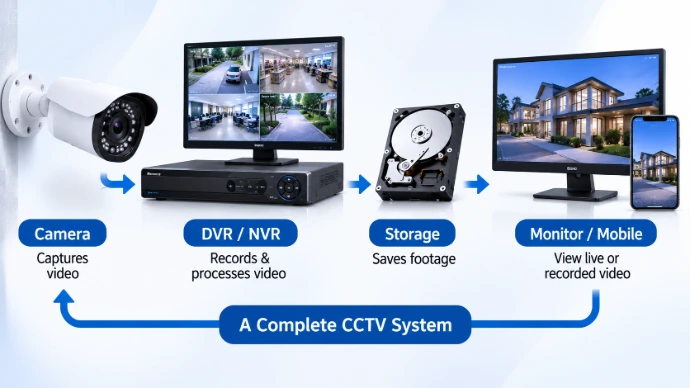
A typical CCTV system includes:
Security Cameras: Capture video footage of the selected area.
DVR or NVR: Records and manages video footage.
Hard Drive: Stores recorded surveillance videos.
Monitor: Displays live or recorded footage.
Network Connection: Allows remote monitoring when supported.
CCTV systems are commonly used in homes, offices, shopping centres, schools, warehouses, hotels and other commercial properties.
2. Different Types of CCTV Security Cameras
Before purchasing a surveillance system, it is important to understand the different camera types and their purposes.
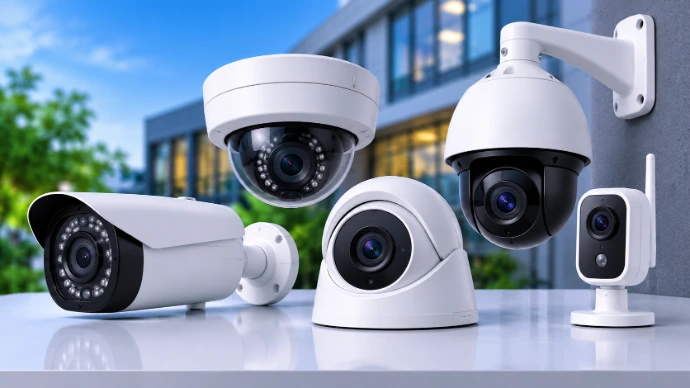
Bullet Cameras
Bullet cameras have a long, cylindrical design and are commonly installed outdoors. They are suitable for monitoring entrances, parking areas, building boundaries and other outdoor spaces.
Main features:
Visible design that can discourage unwanted activity.
Suitable for outdoor surveillance.
Available with infrared night vision.
Different resolutions and viewing angles.
Dome Cameras
Dome cameras have a rounded, dome-shaped design and are often installed on ceilings.
They are commonly used in offices, shops, restaurants, hotels and indoor public areas.
Main features:
Compact and professional appearance.
Suitable for indoor and some outdoor installations.
Difficult to determine the exact direction of some dome camera models.
Available in different viewing angles.
PTZ Cameras
PTZ stands for Pan, Tilt and Zoom. These cameras can move horizontally, vertically and zoom in on selected areas.
They are useful for monitoring larger locations such as warehouses, parking areas and commercial properties.
Main features:
Pan and tilt movement.
Optical zoom on supported models.
Remote camera control.
Suitable for monitoring larger areas.
IP Cameras
IP cameras, also called Internet Protocol cameras, transmit digital video through a network.
They can connect to network video recorders or compatible network systems. Depending on the model, users can also access camera footage remotely.
Main features:
Digital video transmission.
High-resolution recording options.
Network connectivity.
Remote monitoring on supported devices.
3. How Does a CCTV System Work?
A CCTV system works by capturing video through security cameras and sending the footage to a recording device or network system.
The basic process includes:
The camera captures video from the selected location.
The video is transmitted through a cable or wireless network, depending on the system.
A DVR or NVR processes and records the footage.
The recording is stored on a compatible storage device.
Authorized users can view live or recorded footage through a monitor or supported mobile application.
Modern surveillance systems can also provide motion alerts and remote access when these features are supported and configured.
4. DVR vs NVR: What Is the Difference?
DVR and NVR are two common recording systems used in CCTV installations.
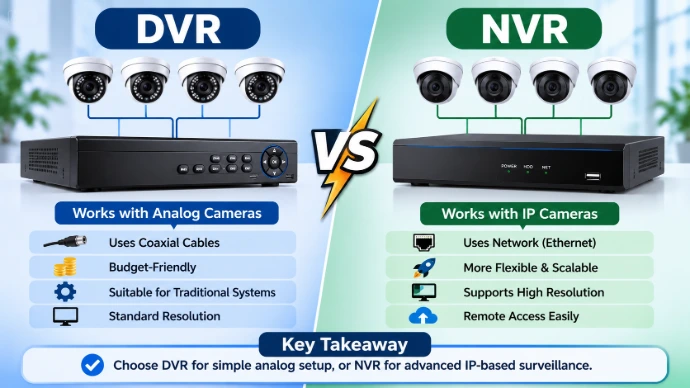
DVR (Digital Video Recorder)
A DVR is commonly used with analogue CCTV cameras. The camera sends video through a coaxial cable to the recorder, where the video is processed and stored.
Advantages:
Suitable for traditional analogue CCTV systems.
Can be an economical option for certain installations.
Available in different channel capacities.
NVR (Network Video Recorder)
An NVR is designed for IP camera systems. The cameras transmit digital video over a network to the recorder.
Advantages:
Supports network-based IP cameras.
Offers flexible network installation options.
Can support high-resolution video depending on the recorder and cameras.
Some systems support Power over Ethernet (PoE).
The right choice depends on your camera compatibility, installation requirements, budget and desired features.
5. Important Features to Consider When Buying CCTV Cameras
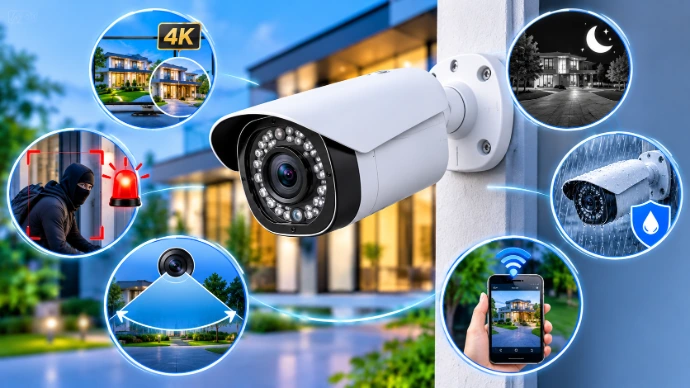
Choosing a CCTV camera is not just about selecting the cheapest or highest-resolution model. You should consider the following features.
Video Resolution
Resolution determines the amount of detail captured in a video.
Common options include:
2MP (1080p Full HD)
4MP
5MP
8MP (4K)
Higher resolution can capture more detail, but actual image quality also depends on the camera sensor, lighting, lens and recording settings.
Night Vision
Night vision helps cameras capture footage in low-light or dark environments.
Many CCTV cameras use infrared (IR) LEDs to produce black-and-white images in darkness. Some models offer colour night vision when sufficient visible light is available.
Motion Detection
Motion detection identifies movement within the camera's field of view.
Depending on the model, it can send notifications to a connected mobile device or activate recording when movement is detected.
Weather Resistance
For outdoor installations, choose cameras designed to withstand environmental conditions.
Look for an appropriate IP (Ingress Protection) rating. For example, IP66-rated equipment is designed to provide protection against dust and powerful water jets under specified test conditions.
Field of View
The field of view determines how much of an area the camera can capture.
A wider viewing angle can cover more space, while a narrower angle can provide more detail in a specific direction.
6. Wired vs Wireless CCTV Cameras
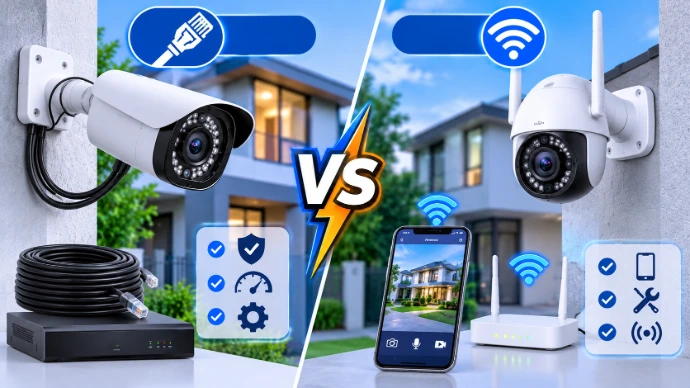
Both wired and wireless CCTV systems have advantages depending on the installation environment.
Wired CCTV Systems
Wired cameras use physical cables to transmit video and, in some systems, provide power.
Advantages:
Stable connection when correctly installed.
Suitable for larger permanent installations.
Less dependent on Wi-Fi signal strength.
Wireless CCTV Systems
Wireless cameras transmit video through a wireless network. However, wireless does not always mean completely cable-free because many models still require a power connection.
Advantages:
Flexible installation.
Useful where running video cables is difficult.
Some models offer battery-powered operation.
Which one should you choose?
Wired systems are often suitable for permanent installations in offices, shops and large buildings. Wireless systems can be convenient for smaller properties or locations where cable installation is difficult.
7. Where Should You Install CCTV Cameras?
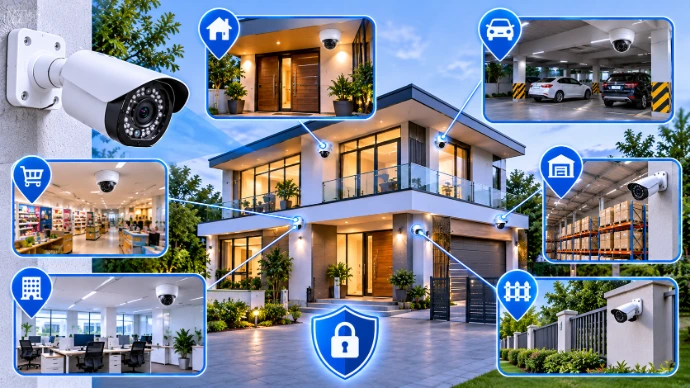
Proper camera placement is important for effective surveillance.
Consider installing cameras in the following locations:
Main entrances and exits.
Parking areas and garages.
Reception areas.
Shop entrances and checkout areas.
Warehouses and storage areas.
Building perimeters and outdoor access points.
Avoid positioning cameras where objects block their view. Consider lighting, camera height and the areas that need monitoring.
Always respect people's privacy and applicable laws when deciding where cameras should be installed.
8. How Much Storage Do CCTV Cameras Need?
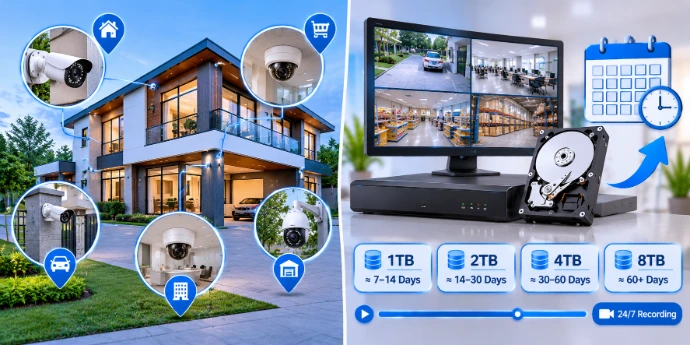
Storage is an important factor when choosing a CCTV system because recorded footage needs sufficient space.
The required storage depends on several factors:
Number of connected cameras.
Video resolution.
Frame rate.
Video compression.
Recording duration.
Continuous or motion-based recording.
For example, a system recording continuously from eight cameras will generally require more storage than a two-camera system recording only when motion is detected.
Many CCTV systems use surveillance-grade hard drives designed for continuous recording.
Before purchasing, calculate the required retention period and choose a compatible storage capacity.
9. How to Protect Your CCTV System from Cybersecurity Risks
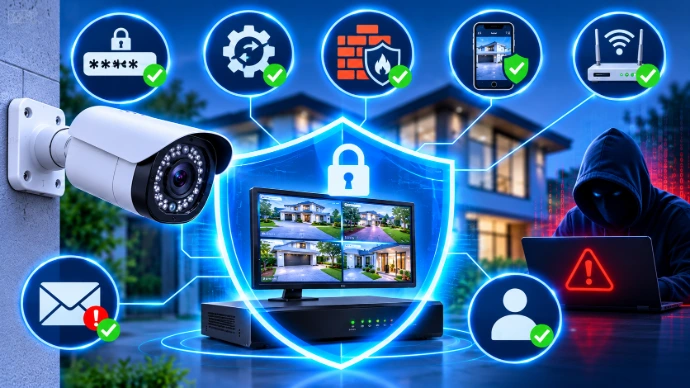
Modern IP cameras are connected to networks, which means they should be protected against unauthorized access.
Follow these security practices:
Change the default username and password.
Use strong and unique passwords.
Keep camera and recorder firmware updated.
Secure your Wi-Fi router.
Enable two-factor authentication when supported.
Limit access to authorized users.
Disable unnecessary remote access features.
Use secure connections and trusted mobile applications.
These steps can help reduce the risk of unauthorized access to your surveillance system.
10. CCTV Privacy and Responsible Installation in Nepal
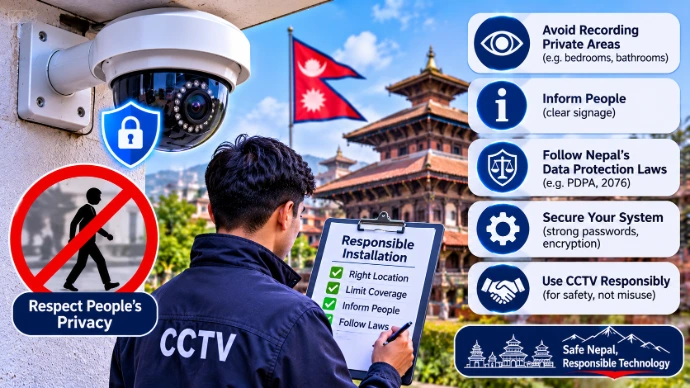
Installing CCTV cameras should always be done responsibly.
In Nepal, the Privacy Act, 2075 includes provisions relating to CCTV installation and privacy.
Section 20 addresses CCTV installation in public places. It states that cameras should not be installed in toilets, bathrooms or changing rooms, and visible notice should be provided to inform people that CCTV cameras are installed.
Section 21 also addresses prohibited surveillance and espionage. Section 9 addresses installing CCTV cameras in another person's residence without consent.
Therefore, before installing a CCTV system:
Respect the privacy of neighbours and visitors.
Avoid recording private spaces.
Display CCTV notices where required.
Restrict access to recorded footage.
Follow applicable laws and installation procedures.
For official information, consult Nepal's Privacy Act and relevant CCTV installation procedures.
11. How to Choose the Right CCTV System for Your Needs
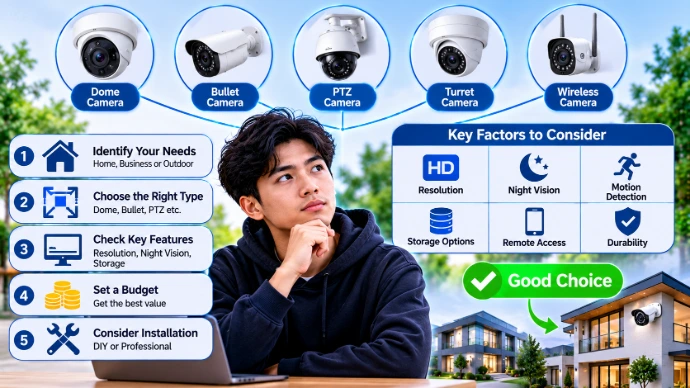
The best CCTV system depends on your property, security requirements and budget.
Consider these general recommendations:
For Home Security
Choose cameras with suitable night vision, motion detection and mobile monitoring features. Consider monitoring entrances, gates and parking areas.
For Shops and Retail Stores
Dome or suitable IP cameras can help monitor customer areas, entrances and checkout counters.
For Offices
Consider IP cameras, an appropriate NVR and sufficient recording storage. Ensure cameras cover entrances and shared working areas without invading private spaces.
For Warehouses
Bullet or PTZ cameras may be useful for monitoring large areas, loading zones and entrances.
Before purchasing, check camera compatibility, recording capacity, installation requirements and warranty support.
CCTV and surveillance systems are useful tools for improving security in homes, offices, shops and commercial properties. With different camera types, recording technologies and smart features available, choosing the right system requires careful consideration.
Understanding camera resolution, night vision, storage capacity, connectivity and privacy requirements can help you make a better purchasing decision.
Whether you need a simple home security camera or a complete business surveillance solution, selecting reliable equipment and installing it correctly can make a significant difference.
Explore suitable CCTV cameras, recording devices and surveillance accessories through our eCommerce store to find a security solution that meets your requirements.